


It is one of the first decisions anyone building a GRLLR outdoor kitchen has to make, and there is no universally correct answer. Kamado and gas suit different cooking styles, different amounts of time, and different kinds of gathering. Here is how to actually decide, rather than which one to buy because it looks better.
A kamado uses charcoal inside a thick ceramic shell that retains heat exceptionally well, which is what makes low and slow cooking, and genuine smoky flavour, possible in a way gas struggles to replicate. It takes longer to light and reach temperature, generally 15 to 30 minutes depending on size, and takes more attention to run well: managing airflow through the vents is how you control temperature, not a dial. If you are new to kamado cooking, our beginner’s guide to choosing a kamado covers the basics.
A Prime gas barbecue lights in seconds and reaches cooking temperature in a few minutes. Heat is controlled precisely with a dial rather than airflow, which makes it far more forgiving for quick weeknight cooking or for anyone still learning to judge heat by feel.
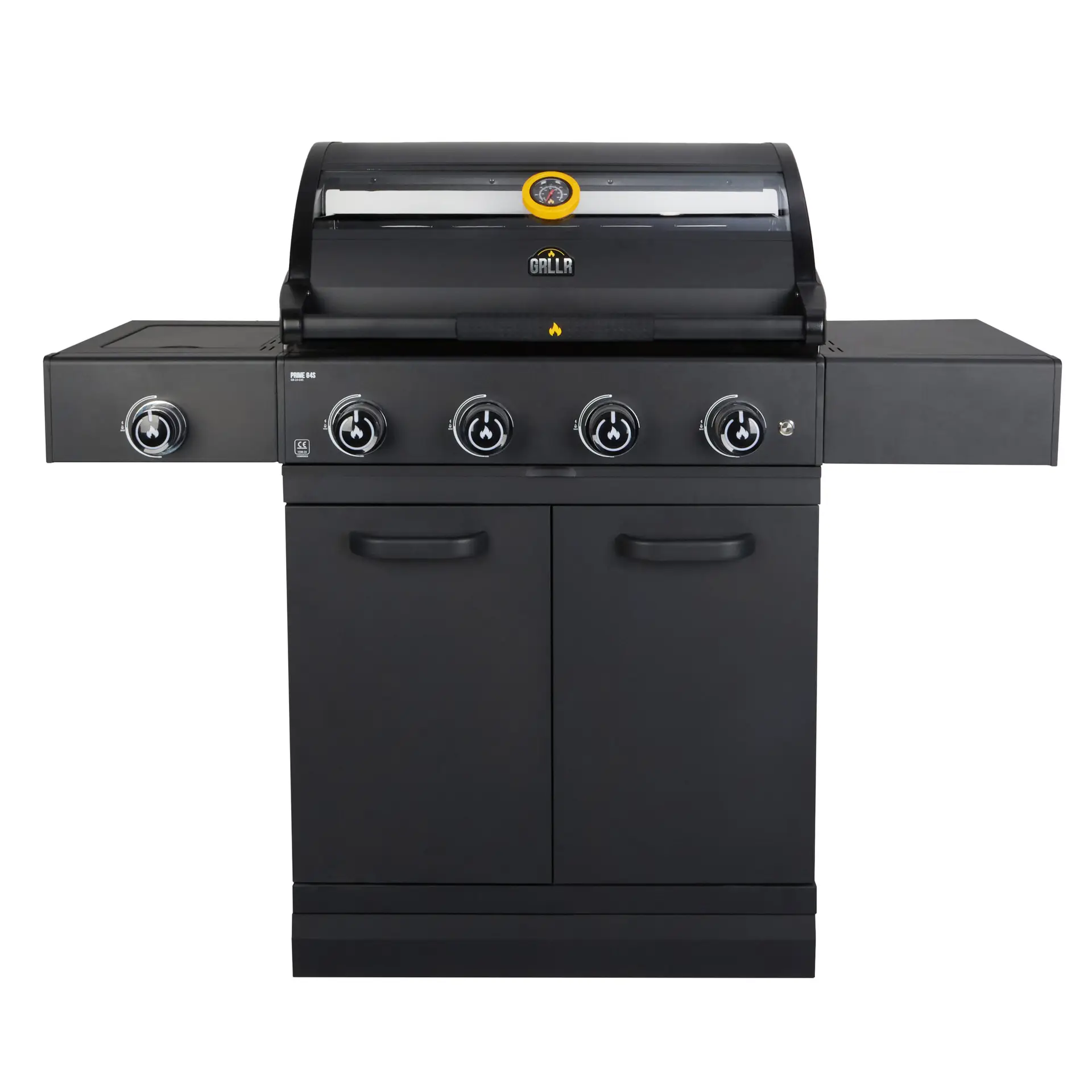
If most of your outdoor cooking is a Tuesday evening after work, gas wins on convenience alone: light it, cook, done, with minimal cleanup. If weekend cooking, for guests, over a few hours, is more your pattern, a kamado rewards the extra time with results gas genuinely cannot match for smoked or slow-cooked food.
This is not an either-or choice for everyone. A meaningful number of GRLLR outdoor kitchens run both: gas for convenience, kamado for occasions, connected into the same run of Connect units rather than treated as competing purchases.
Gas has a straightforward, predictable running cost: a bottle of propane or a natural gas connection, easily budgeted. Charcoal for a kamado is a recurring cost too, but the ceramic shell’s heat retention means a kamado uses noticeably less fuel per cook than an open charcoal grill would.
Maintenance differs more than cost. A kamado needs its ash cleared regularly and its lid gasket checked periodically, small jobs, worth doing rather than skipping. A gas barbecue needs its burners kept clear and its grill plates cleaned, more familiar territory for most people. Neither is high-maintenance by any serious standard, but they are different kinds of upkeep. The gas grill accessories guide covers the add-ons worth having, and the winter preparation guide covers both appliances through the colder months.
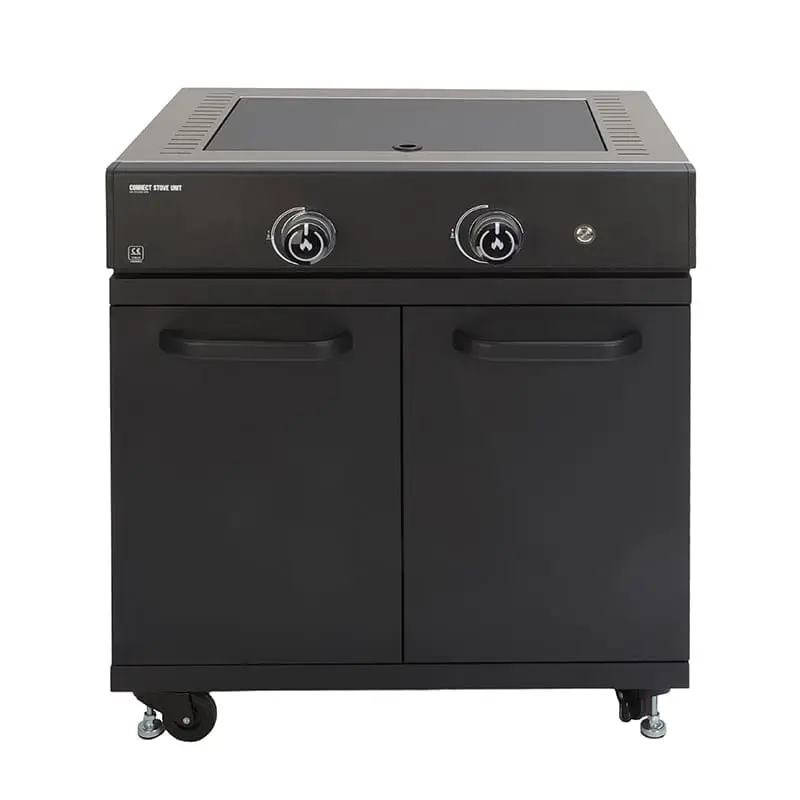
Both integrate into the Connect system, a Connect Stove Unit for a built-in gas hob, or a dedicated Kamado Unit for a Build In Ember kamado. Neither demands more layout planning than the other, though a kamado needs slightly more clearance around it for the lid to open fully and for ash removal access.
If you are only buying one appliance to start, choose based on how often you actually cook and what kind of results you want, not which feels like the more serious choice. Quick and convenient points to gas. Slow, hands-on and flavour-focused points to kamado. Most people who start with one end up adding the other within a season or two once the kitchen itself is established, which is exactly what a modular system is built to allow. For the questions people ask most before choosing, see our GRLLR outdoor kitchen FAQ.
