


Every outdoor kitchen supplier says their units are weatherproof. Not all of them mean the same thing by it. A cabinet that survives a display showroom is not the same as one that survives a genuinely wet British autumn followed by a hard frost, so it is worth understanding what “weatherproof” actually needs to cover before you commit to a layout.
GRLLR’s Connect units use 304-grade stainless steel for worktops and exposed surfaces, the same grade used in commercial kitchens rather than the thinner, lower-grade steel sometimes used to cut cost on outdoor furniture. 304 resists the pitting and surface rust that cheaper grades develop within a season or two of UK weather, salt air near the coast, road grit inland, and the general damp that never fully clears over a British winter.
The difference is not always visible on day one. A lower-grade steel worktop can look identical to 304 when it arrives and still show its first spots of corrosion within a year. Ask what grade is actually used before assuming “stainless” means the same thing everywhere.
Worktops get most of the attention, but doors, drawers and their runners are usually where a cheaper outdoor cabinet fails first. Soft close mechanisms and heavy duty casters, standard across the Connect range, matter more outdoors than they would indoors: swelling from damp, or grit working into a cheap runner, turns a smooth-closing drawer into a sticking one within a season if the components are not built for it.
Doors adapted from indoor kitchen ranges are the most common shortcut in this market. They may look right in a showroom, but indoor cabinetry is not engineered for repeated wet-dry cycles or for standing at ground level exposed to splashback and rain. Cabinetry built specifically for outdoor use, rather than adapted from an indoor line, is worth the difference even where the upfront cost is higher.
Weatherproof units still benefit from covers during the months they are used least. A Connect side unit cover plate protects the joins between units, generally the first place moisture finds a way in on any modular system, connect or otherwise. It is a small, inexpensive addition next to the cost of the units themselves.

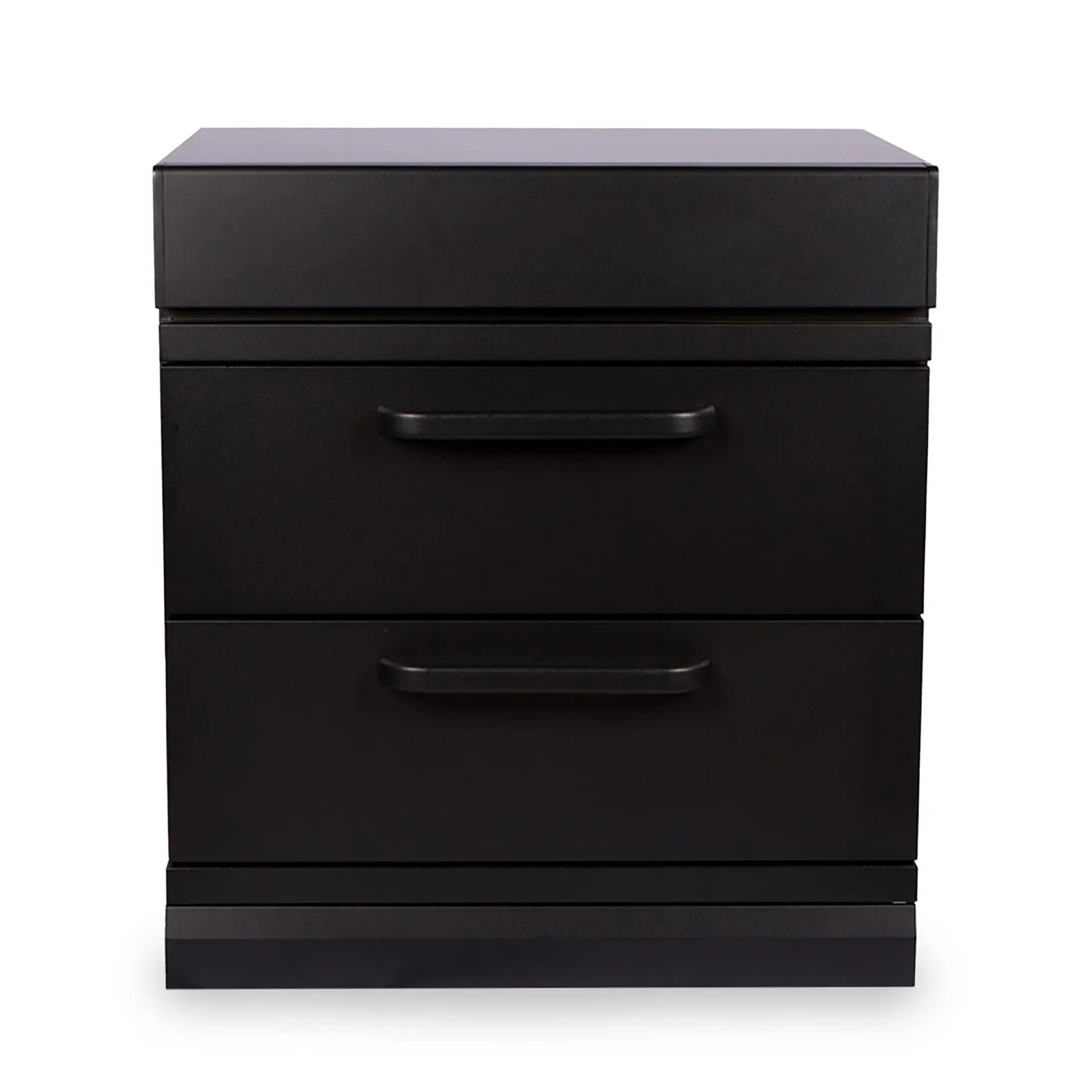
Storage is worth thinking about separately from worktop and cabinet material. The Connect Storage Unit keeps tools, accessories and anything you do not want exposed to the elements enclosed rather than left on an open worktop between uses.
Weatherproof does not mean maintenance-free. Even 304 stainless steel benefits from an occasional wipe down to clear standing water, leaf debris and the general grime that collects over an unattended month, particularly in autumn when fallen leaves sit against worktops and door seams. Left long enough, organic debris holds moisture against a surface in exactly the way a well-drained, exposed surface does not.
It also does not mean identical performance everywhere in the UK. Coastal gardens deal with salt air, which accelerates any corrosion that does start. Sheltered, inland gardens have an easier time of it. Neither changes the underlying advice: buy units built for outdoor use from the start, in a proper grade of steel, and the weather becomes a maintenance question rather than a replacement one.
