


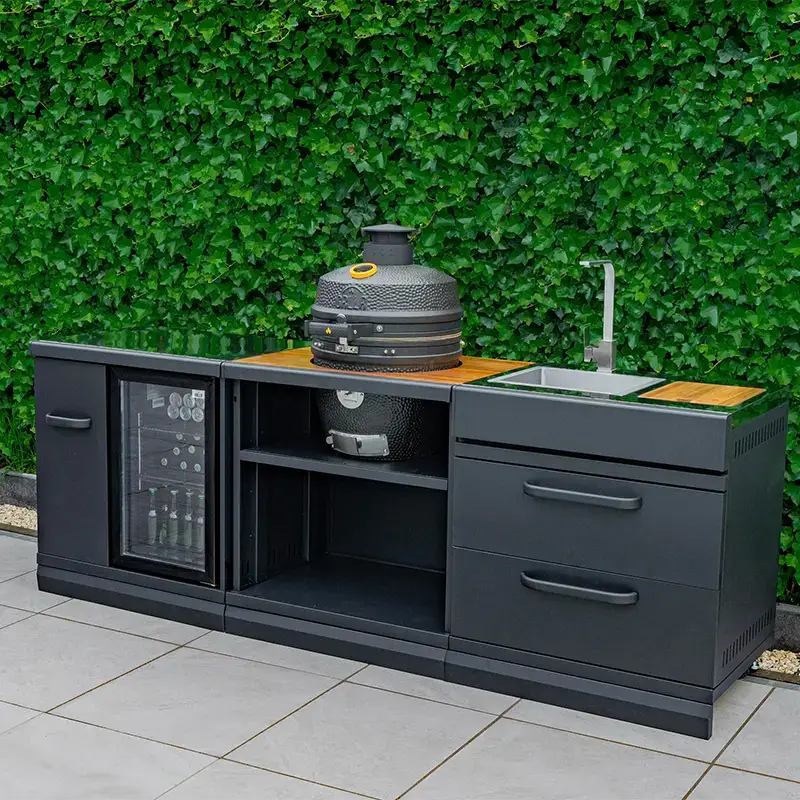
A freestanding barbecue is fine until you are carrying trays through the house, balancing marinades on a side table and realising there is nowhere sensible to put a hot grill plate. That is usually the moment an outdoor kitchen stops feeling like a luxury and starts sounding like the obvious next step.
The appeal of modular design is simple. You do not need to commit to a fully bespoke build from day one. You can create a polished, professional-looking cooking space that fits your garden, your style of entertaining and the way you actually cook. The best modular outdoor kitchen ideas are not just about adding cabinets around a grill. They are about building a layout that works beautifully on a quiet Wednesday evening and just as well when the whole family turns up on a bank holiday weekend.
Before choosing finishes or deciding how many units you want, think about what sits at the heart of the space. If you mostly cook fast, sociable meals for a crowd, a high-performance gas barbecue often makes the most sense. If you prefer longer, more involved cooks with smoke, fire and slower weekend sessions, a kamado grill may shape the layout differently. If versatility matters, combining cooking appliances can create a more complete outdoor kitchen.
This is where modular planning earns its keep. Rather than forcing your cooking habits into a fixed design, you build around the equipment you will genuinely use. A serious grill enthusiast may want prep space on both sides of the barbecue, while a host who likes pizza nights might prioritise a dedicated surface for dough, serving boards and accessories. The right configuration feels considered because it starts with behaviour, not brochure imagery.
One of the most effective modular outdoor kitchen ideas is the straight-line layout with the grill at the centre. It suits patios, terraces and narrower garden spaces where you want a clean architectural look without overcomplicating the footprint.
Place the barbecue in the middle, then frame it with practical modules such as drawers, cupboards or a worktop unit. This creates visual balance and, more importantly, a sensible workflow. You can prep on one side, cook in the middle and plate up on the other. For many UK homes, this layout offers the strongest mix of simplicity, elegance and day-to-day usability.
If your outdoor space allows for a corner layout, an L-shaped kitchen changes the atmosphere immediately. It feels more integrated, more substantial and better suited to entertaining because it naturally creates zones.
One side can handle cooking and the other can be given over to prep, drinks or serving. That means less congestion around the grill and more room for guests to gather without getting in the way. An L-shape also helps define an outdoor living area, especially if the kitchen sits next to dining furniture or a covered seating space.
A sink is one of those features people sometimes treat as optional until they have one. Then they would not design without it again. For anyone who entertains regularly, a sink module makes the outdoor kitchen far more self-sufficient.
You can rinse salad, wash hands, top up pans and deal with light cleaning without trekking indoors. It also helps the whole space feel like a true kitchen rather than a barbecue station with storage. The trade-off is practical planning. Plumbing requirements will influence where the kitchen can sit, so this is best considered early rather than as a late addition.
Few things interrupt the flow of a gathering more than constant trips back inside for chilled drinks, condiments or ingredients. A refrigeration module keeps everything close to hand and lets the host stay present.
This is particularly useful if your garden is designed for long, relaxed entertaining. Soft drinks for the children, wine for the table, marinades for the next round of cooking and desserts for later can all stay outside where they belong. From a design perspective, integrated refrigeration also gives the kitchen a more refined, high-spec finish.
Storage is not about filling every gap with a cabinet. It is about deciding what needs to live outside and making room for it in a way that keeps the space tidy and efficient. That could mean drawers for utensils and thermometers, enclosed cupboards for fuel or covers, or a dedicated spot for pizza stones, grill plates and rotisserie accessories.
The smartest modular outdoor kitchen ideas usually include more storage than people first expect. Outdoor cooking comes with kit, and a premium setup deserves better than a plastic box in the shed. Well-planned storage keeps surfaces clear and preserves the clean, design-led look that makes the whole kitchen feel elevated.
A generous work surface changes how enjoyable outdoor cooking feels. Without it, even the best grill setup can become awkward. You need room for chopping boards, platters, seasoning, resting meat and plating dishes without juggling everything in stages.
Prep space is especially important if you cook with multiple components or like serving in a more polished way. If your outdoor kitchen is part of your entertaining style, not just a place to flip burgers, broad uninterrupted surfaces are worth prioritising. They make the whole kitchen feel calmer, more capable and more luxurious to use.
Modular systems work best when function and appearance are considered together. Cabinet finish, worktop material and appliance choice should feel coherent with the house and garden rather than appearing like separate purchases lined up side by side.
Darker tones often create a smart contemporary look, particularly against stone paving or rendered garden walls. Stainless steel details can bring a more professional edge. The key is balance. Too many contrasting finishes can make the kitchen feel busy, while a well-matched palette gives it the confidence of a built-in installation.
A smaller footprint does not rule out ambition. It simply demands better discipline. In compact gardens, modular design is often the better choice because every unit has to justify itself.
A slim grill run with integrated storage can look exceptionally sharp on a townhouse patio or courtyard. You may skip the sink and use that space for prep instead. You may choose refrigeration later rather than at the start. The advantage is that the kitchen can grow with your needs. A carefully planned small modular layout can feel more sophisticated than a larger one stuffed with features that never quite earn their place.
Outdoor kitchens in the UK need a degree of realism. Sunshine may be part of the dream, but wind, rain and fluctuating temperatures are part of the brief. That affects everything from material choice to positioning.
If possible, place the kitchen where it benefits from some shelter, whether from a wall, pergola or architectural screening. Choose durable cabinetry and surfaces that can cope with the elements, and think about covers and storage from the beginning. A beautiful setup is only a good investment if it continues to look and perform well after a few seasons of actual British use.
Not every part of the kitchen needs to revolve around cooking. In many gardens, the most useful addition is a section dedicated to serving and drinks. This might be where guests gather before dinner, where ice buckets and glassware sit, or where finished food lands before going to the table.
By giving hospitality its own area, you reduce pressure around the main cooking zone. It also makes the kitchen feel more generous and welcoming. For hosts who love long lunches and late evenings outdoors, this can be the detail that turns a practical setup into a memorable one.
A modular kitchen should support the full cooking experience, not just the core appliance. If you use a pizza stone, rotisserie, thermometer, grill plate or charcoal tools regularly, design with those items in mind.
That may influence storage depth, surface space or the type of modules you choose. It is a small detail on paper, but in use it matters. A kitchen that accommodates accessories elegantly feels complete. One that leaves them stacked awkwardly in corners feels unfinished, no matter how premium the grill itself may be.
The difference between a good-looking outdoor kitchen and one that genuinely works often comes down to planning. Dimensions, door clearances, appliance spacing and circulation all matter more than people expect. What seems right in theory can feel cramped, unbalanced or wasteful once installed.
This is why visual planning tools are so valuable. A configurator lets you test layouts, compare module combinations and understand how the kitchen will sit within the space before making decisions. For discerning homeowners, that level of clarity is not a nice extra. It is part of buying well. At GRLLR UK, that process is designed to help customers move from inspiration to a tailored, design-led solution with confidence.
The strongest argument for modular design is not flexibility alone. It is the way flexibility supports better decisions. You can start with the essentials, invest in professional-grade performance and then refine the setup over time as your hosting style evolves.
That might mean beginning with a barbecue and storage modules, then adding refrigeration once you realise how often guests gather around the garden. It might mean choosing a cleaner linear layout now and extending it later into a larger entertaining zone. Instead of locking you into a one-size-fits-all approach, modular design gives you a smarter route to an outdoor kitchen that feels both aspirational and genuinely yours.
A well-planned outdoor kitchen should make cooking feel easier, hosting feel more generous and your garden feel like somewhere everyone wants to linger a little longer.
