


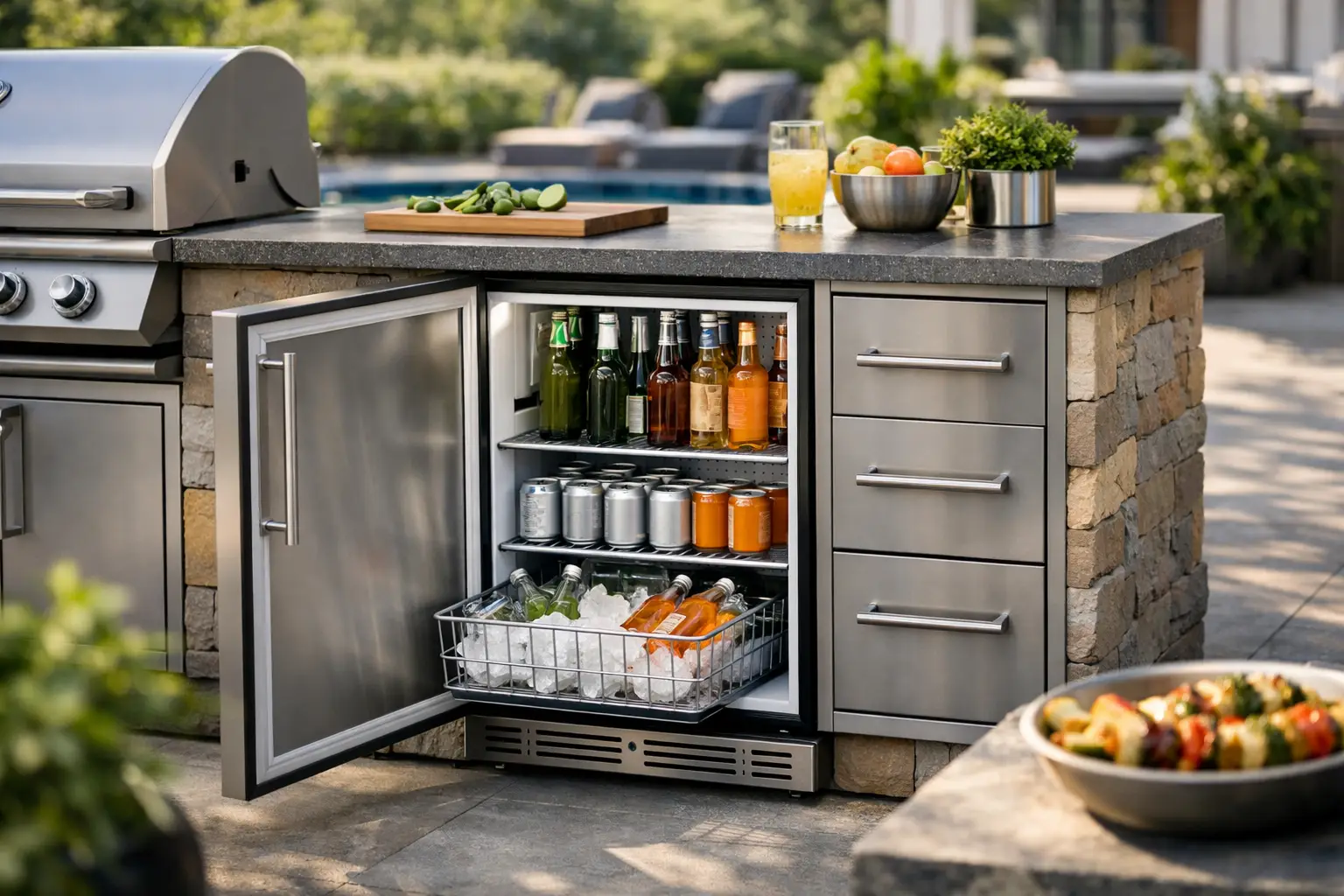
A warm rosé, soft butter and a queue at the back door for more ice are usually the first signs that an outdoor kitchen needs better refrigeration. An outdoor kitchen fridge cabinet is not just a neat place to house a fridge. It is what turns a barbecue area into a genuinely usable entertaining space, where ingredients, drinks and serving essentials stay exactly where you need them.
For design-conscious homeowners, that matters. A premium outdoor kitchen should feel considered from end to end, not like a grill with a few add-ons around it. The fridge cabinet plays a quiet but central role in that layout. It affects how the kitchen looks, how it flows, and how often you actually enjoy using it.
Refrigeration changes the rhythm of outdoor cooking. Instead of stepping back into the house every few minutes, you keep chilled drinks, marinades, salad ingredients and dessert close to hand. That is practical, of course, but it also changes the atmosphere. Guests stay gathered in one place. The host stays part of the conversation. Service feels easier and more polished.
A dedicated cabinet matters because outdoor conditions are demanding. Even in the UK, exposure to rain, fluctuating temperatures, pollen and airborne grease can wear down poorly planned setups quickly. A purpose-designed cabinet creates a cleaner, more integrated finish while giving the fridge the support and ventilation it needs.
There is also the visual side. In a modular outdoor kitchen, consistency is everything. A built-in fridge framed by matching cabinetry looks intentional and architectural. A freestanding undercounter appliance pushed into a gap does not.
The right choice starts with materials. Outdoor cabinetry needs to cope with moisture, changing temperatures and frequent use without swelling, rusting or fading prematurely. Stainless steel remains a strong option for many premium kitchens because it is durable, hygienic and visually aligned with professional-grade cooking appliances. Powder-coated finishes can also work beautifully when they are engineered for exterior use and matched properly across the full kitchen run.
Construction quality matters as much as surface finish. Doors should open cleanly, handles should feel solid, and the cabinet should have enough structural integrity to support the appliance without movement or distortion over time. In a luxury garden setting, flimsy cabinetry shows itself quickly.
Ventilation is the other non-negotiable. A fridge built into cabinetry cannot simply be boxed in. It needs airflow around the unit so it can perform efficiently and avoid unnecessary strain. Exact ventilation requirements depend on the model, which is why cabinet and appliance compatibility should be checked early rather than at the end of the planning process.
Then there is weather protection. No outdoor kitchen is completely immune to the British climate. A well-designed cabinet helps shield the appliance from direct exposure, but placement still matters. A covered patio or pergola will always be gentler on refrigeration than an exposed corner of the garden.
A fridge cabinet works best when it supports how you entertain. If your outdoor kitchen is built around cooking theatre, place refrigeration within easy reach of the prep zone so ingredients and chilled sides stay close to the grill. If your garden gatherings are more drinks-led, the fridge may sit more naturally near a serving area or bar section.
Distance is worth thinking about. Too close to the main grill and the appliance can be affected by heat. Too far away and it becomes less convenient, especially when you are hosting a larger group. The sweet spot is usually near enough to support prep and service, while still allowing comfortable movement between hot and cold zones.
This is where modular design comes into its own. Rather than forcing the fridge into a fixed layout, you build around the way you cook, serve and host. A cabinet can sit between storage units, next to a sink module, or as part of a wider entertaining station with worktop space above for pouring drinks or plating food.
Not every outdoor kitchen is aiming for the same look. Some homeowners want a sleek contemporary run of cabinetry that mirrors a high-end indoor kitchen. Others prefer a more statement outdoor setup, where the grill, fridge, storage and sink each have a clear presence but still feel cohesive.
The cabinet finish should support the overall design language of the garden. Dark cabinetry can feel crisp and architectural against porcelain paving or rendered walls. Brushed stainless steel brings a more overtly professional look. Wood-effect surfaces can soften a scheme, though true timber in exposed outdoor conditions needs careful consideration and maintenance.
It is also worth thinking beyond the cabinet itself. The fridge door, handles, adjacent modules and worktop material all contribute to the final result. A well-designed kitchen feels connected across every element. That is often what separates a premium installation from a pieced-together one.
There is a difference between simply having a cold drinks fridge outdoors and creating a refrigeration setup that performs properly in an outdoor kitchen. Purpose-suited outdoor refrigeration is designed to cope with variable ambient conditions more reliably than many indoor models. That makes a real difference to temperature stability, longevity and day-to-day confidence.
The cabinet should support that level of performance rather than compromise it. If the fit is too tight, airflow is poor, or the appliance is not suited to the environment, the system will struggle. That may not show on a mild spring evening, but it can become obvious during busy summer weekends when the fridge door is opening constantly.
For serious hosts, capacity matters too. A compact fridge may be perfect for weeknight family use, but if you regularly entertain, you may want more room for wine, beer, mixers, garnishes, chilled platters and barbecue ingredients. This is one of those areas where buying slightly better than your minimum requirement usually pays off.
Worktop height is often overlooked. Your fridge cabinet should sit comfortably within the wider kitchen run so the surface above remains usable for prep or service. If levels are inconsistent, the whole design feels less resolved.
Door swing is another small detail with a big impact. Consider how the fridge opens in relation to nearby cabinets, walls and walkways. A beautifully planned kitchen can still feel awkward if one open door blocks the main prep route.
Power supply needs careful thought as well. Outdoor electrical planning should be done properly from the start, not added as an afterthought once the cabinetry is in place. Positioning, weather protection and safe installation all matter.
And then there is storage balance. A fridge cabinet should not swallow up space that would be better used for drawers, bins or dry storage if those functions are missing elsewhere. The strongest outdoor kitchens feel balanced. Cold storage is valuable, but it works best as part of a complete setup.
An outdoor kitchen fridge cabinet makes most sense when it is considered as part of a broader system. That is especially true if you are investing in a high-spec garden space rather than adding one appliance at a time. Modular design allows you to align refrigeration with your grill choice, sink, storage and worksurfaces so the result feels coherent in both style and function.
This is where specialist planning tools can save time and expensive mistakes. Visualising the layout, checking dimensions and understanding how each module interacts is far more useful than estimating from product photos alone. At GRLLR UK, that connected approach is central to creating outdoor kitchens that look refined and work brilliantly in real life.
The best setups are rarely the biggest. They are the ones where every cabinet has a purpose, every appliance has the right space around it, and every finish belongs together. A fridge cabinet may not be the headline feature, but it often makes the difference between an outdoor kitchen that is merely attractive and one that is genuinely effortless to use.
If you are planning your space now, treat refrigeration as part of the architecture, not a late addition. Get that right, and summer hosting feels less like logistics and more like what it should be – good food, cold drinks and everyone staying exactly where the evening is happening.
