


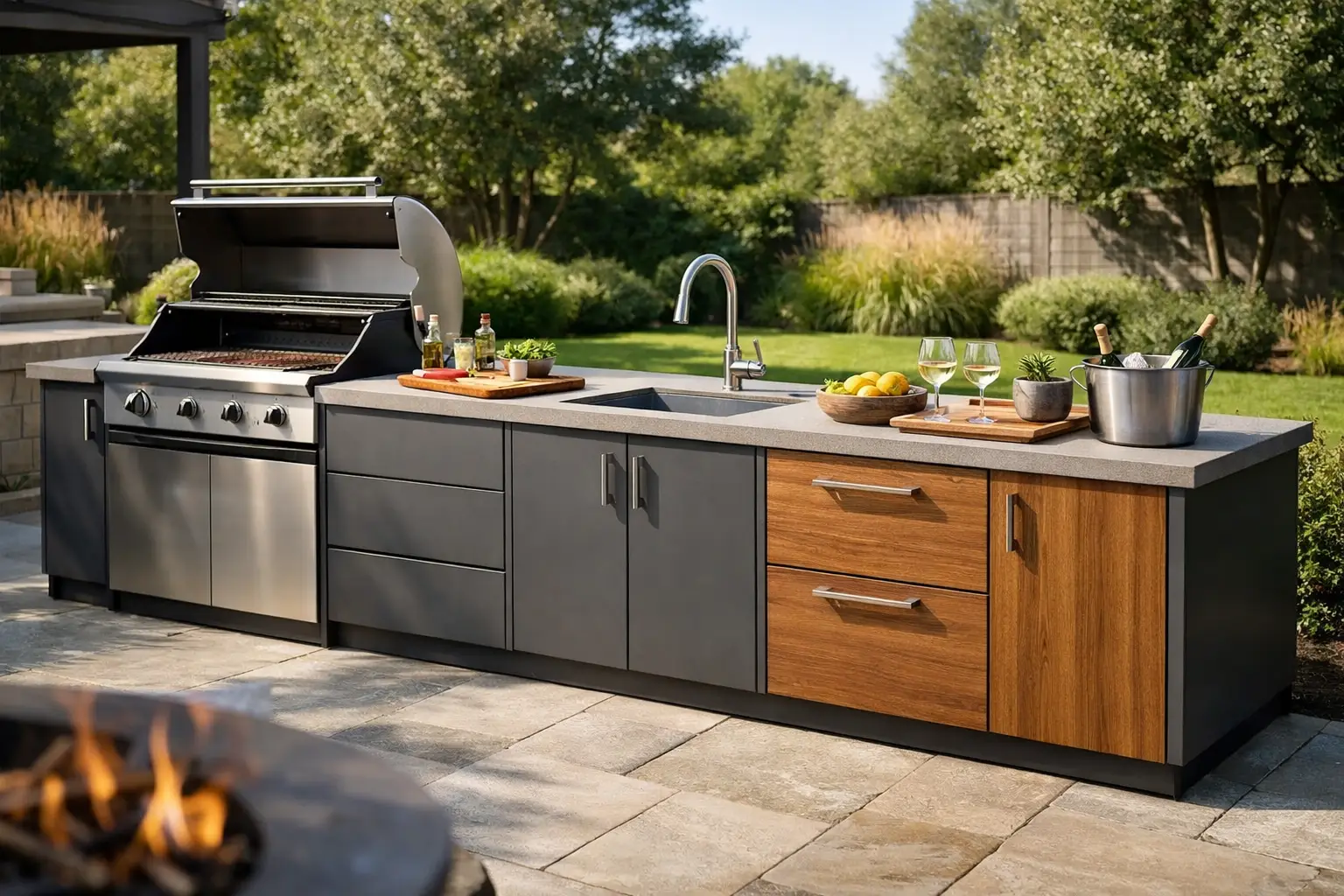
A garden kitchen can look spectacular in a showroom image and still disappoint once it meets a British winter. That is usually where the difference lies between buying a few outdoor units and designing a proper outdoor kitchen. If you are researching outdoor kitchen cabinets UK homeowners can rely on year after year, the details matter – materials, layout, storage, weather resistance and how each module works with the way you actually cook and entertain.
The right cabinetry does far more than hold a barbecue in place. It sets the tone for the whole space, keeps preparation practical, and turns outdoor cooking into something that feels considered rather than improvised. For design-conscious homeowners, that means choosing cabinets that look refined on the patio while standing up to rain, temperature shifts and regular use.
Whatever term you search for, outdoor kitchen cabinets, outdoor kitchen cabinetry, or simply kitchen cabinets outside, the fundamentals below apply the same way. It is the build quality and material choice that separates a cabinet that lasts from one that does not, not the name on the listing.
Buying for the UK means planning for a climate that is rarely extreme in one direction, but constantly demanding. Damp air, frequent rain, frost, pollen, coastal conditions in some areas and long periods of moisture can all take their toll. Cabinets that are perfectly acceptable in a dry, hot climate may not age well here.
That is why the outdoor cooking cabinets UK buyers choose need to be built specifically for external use, not adapted from indoor cabinetry. Powder-coated steel, stainless steel and other weather-resistant finishes tend to perform far better than materials that can swell, warp or deteriorate when exposed to repeated moisture. Doors, hinges, handles and runners matter just as much as the cabinet shell. A premium unit should feel solid when opened, close cleanly and continue doing both after seasons of use. Our guide to weatherproof outdoor kitchen units explains what that means in practice, from steel grades to door and drawer construction.
There is also the visual side. In many British homes, the outdoor kitchen sits close to the house, often in view from the kitchen or dining area. Cabinetry therefore has to work as part of a wider design scheme. A modular system with clean lines and a coordinated finish will usually create a more polished result than a collection of separate pieces bought over time.
For many homeowners, modular cabinetry offers the best balance of freedom and practicality. A fixed masonry kitchen can be impressive, but it is less flexible, harder to adapt and often slower to install. Modular outdoor cabinets give you structure and design consistency without locking you into a layout that cannot evolve.
That flexibility matters more than people expect. You may begin with a built-in Gas barbecue and storage, then later decide to add refrigeration, a sink module or extra preparation space. A modular system makes that possible while keeping the overall kitchen cohesive.
It also helps with planning awkward spaces. British gardens are not all wide, open rectangles. Many patios are compact, side-return spaces can be narrow, and entertaining areas often need to work around doors, fences or planting. Modular cabinets let you build around the realities of the site rather than force the space into a rigid plan.
One of the biggest mistakes in outdoor kitchen design is choosing cabinetry based on appearance alone. The better approach is to start with cooking style. A host who loves long lunches and drinks outdoors needs a different setup from someone focused on high-heat grilling for large groups.
If you mostly grill and serve straight away, generous worktop space beside the barbecue may matter more than extensive closed storage. If you entertain often, refrigeration and organised storage for glassware, boards, plates and serving pieces become far more valuable. If your outdoor kitchen is meant to reduce trips indoors, a sink cabinet and waste management setup start to earn their place.
There is also the question of fuel and appliance type. Built-in Gas barbecues, kamado grills and specialist cooking appliances all create different planning requirements around ventilation, clearances and adjacent surfaces. Cabinet choice should support the appliance, not simply frame it.
Durability is the obvious starting point, but it should not be the only one. Premium outdoor kitchen cabinetry earns its place through everyday usability as much as weather resistance.
Look closely at the finish and construction. Powder-coated metal cabinetry offers a crisp, architectural look and can be highly effective in British conditions when properly engineered. Stainless steel remains a strong option, particularly for those who want a professional outdoor cooking aesthetic, though the exact grade and finish will affect maintenance and appearance over time.
Storage design matters too. Deep cupboards can be useful, but they can also become awkward if everything disappears into the back. Drawers often make better use of space for utensils, plates and accessories. Dedicated modules for refrigeration, sinks or bins can make the kitchen feel complete rather than pieced together.
Then there is the worktop relationship. The cabinets themselves are only part of the experience. You need enough landing space around the grill, enough preparation area for serious cooking and a layout that avoids crowding when more than one person is outside. The best outdoor kitchens feel calm to use, even when the food is ambitious and the guest list is not small.
A beautiful bank of cabinets will not fix a poor layout. Outdoor kitchens work best when they support movement – prepping, cooking, plating, serving and socialising without constant backtracking.
In smaller gardens, a linear layout is often the smartest solution. It keeps everything accessible and suits patios where depth is limited. In larger spaces, L-shaped or extended modular arrangements can create better zoning, separating hot cooking areas from drinks, prep or serving. For worked examples, including an L-shaped layout, see designing a custom outdoor kitchen.
Think about where guests naturally gather. Most people want to socialise near the cook, but not directly in the working area. Cabinet placement can help shape this. A run of storage and prep space can act as a natural boundary, giving the cook room to work while keeping the atmosphere open and welcoming.
Lighting and shelter should also influence cabinet planning. If your kitchen sits beneath a pergola or covered structure, you may have more freedom with appliance placement and year-round use. In exposed settings, choosing cabinetry with proven outdoor performance becomes even more important.
For a premium outdoor kitchen, aesthetics are not superficial. Cabinets define the visual language of the entire setup. Sleek dark finishes can feel contemporary and architectural, while lighter tones may sit more softly in a garden setting. Handle design, door lines and integrated appliances all contribute to whether the final result feels luxury-led or merely practical.
Even so, style should never come at the expense of performance. Glossy finishes that show every mark, or attractive units with limited storage logic, can quickly become frustrating. The strongest designs marry clean visual appeal with proper usability.
That is where a coordinated system has a clear advantage. Matching cabinetry, appliances and accessories create a more refined outdoor room, rather than a barbecue with a few storage pieces beside it. For homeowners investing seriously in outdoor living, that cohesion is often what lifts the whole project.
Most outdoor kitchen regrets happen before anything is delivered. The layout looked right in theory, but the fridge door clashes with another unit, prep space is too tight, or the proportions feel wrong once installed.
A proper configurator or design planning tool removes much of that risk. It lets you test cabinet combinations, dimensions and appliance placements before committing. That is especially useful when building a modular kitchen around a fixed patio area or trying to balance visual symmetry with practical cooking flow.
For buyers wanting a more tailored result, design support can be just as valuable as the cabinetry itself. At the premium end of the market, that guidance helps turn inspiration into a kitchen that genuinely works. GRLLR offers this kind of planning through its modular outdoor kitchen configurator, allowing homeowners to visualise layouts, view dimensions and build a more considered space.
Outdoor kitchens are not an impulse purchase, and the cabinetry should be approached with the same mindset as the grill itself. Cheaper units may reduce the initial spend, but if they fail to cope with the weather, limit appliance choices or make the kitchen harder to use, they rarely represent good value.
A premium cabinet system tends to justify itself in three ways. It lasts longer, it looks better over time, and it gives you more freedom to create a kitchen that feels complete. That last point matters because the pleasure of outdoor cooking is not only about the food. It is also about hosting with ease, moving less between indoors and out, and creating a setting where people want to stay.
The best outdoor kitchen cabinets are the ones that make all of that feel effortless, even though the planning behind them was anything but. Choose with the British climate, your cooking habits and your garden layout firmly in mind, and the result will feel less like a garden add-on and more like a natural extension of how you live. For care after purchase, see our guide to preparing your GRLLR outdoor kitchen for winter, and if you would like to see units in person, our where to buy guide lists UK stockists.
